Quantitative MRI with Uncertainty Quantification
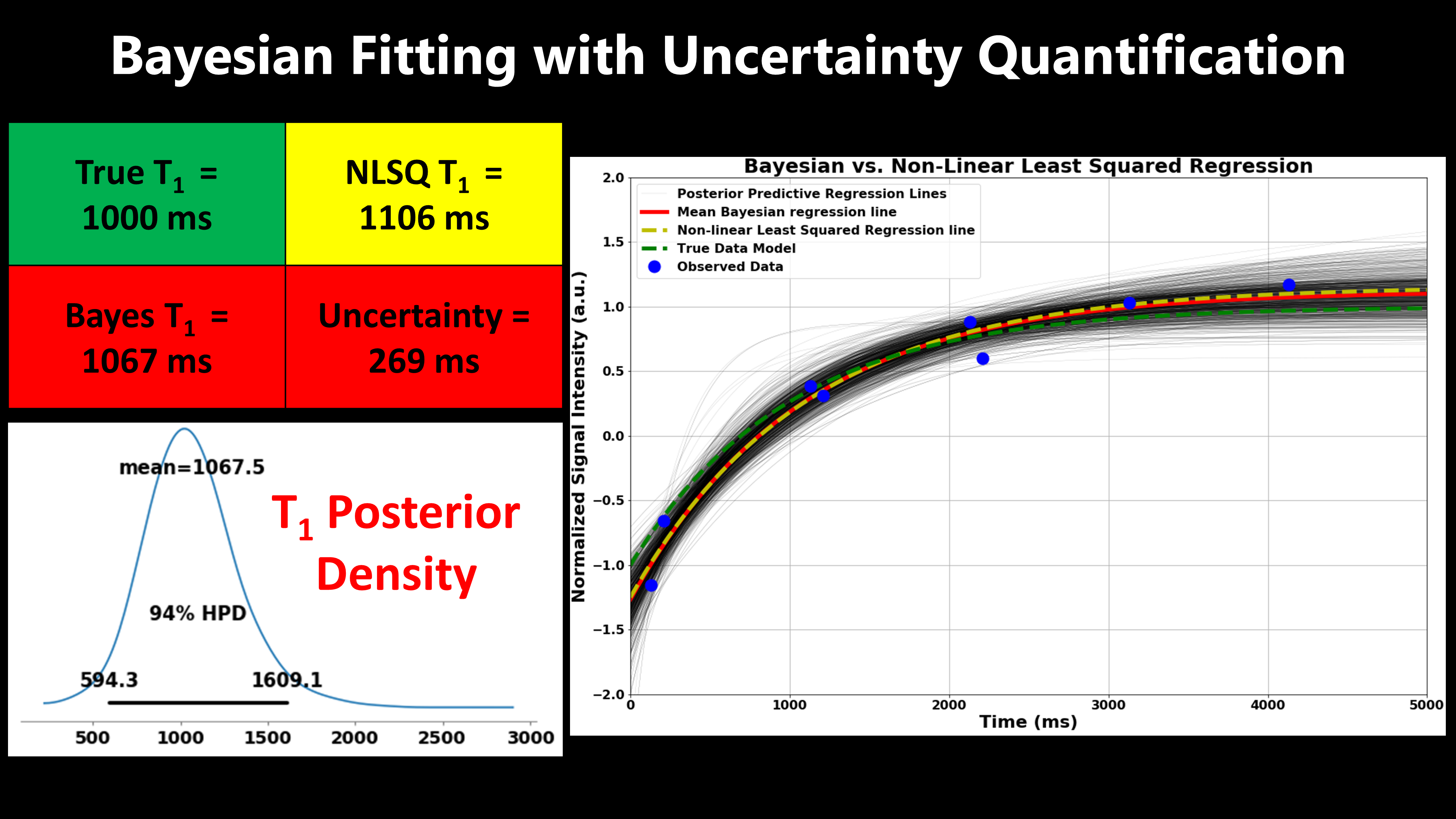
Filling the gap in quantitative MRI (qMRI) by integrating uncertainty quantification (UQ) into qMRI pipelines using Bayesian fitting.
In quantitative Physics, it is unthinkable to report measurements without associated uncertainties. However, in quantitative MRI (qMRI), uncertainty quantification is largely ignored as none of commercially available qMRI solutions provide uncertainty estimates.
This project demonstrates that Bayesian fitting can be easily integrated into qMRI pipelines to provide uncertainty quantification, which would help clinicians decide whether the abnormal values are due to underlying pathologies or due to spurious confounding factors.
Additionally, it is natural to incorporate prior knowledge into the Bayesian framework that in turn helps improve the accuracy and precision of qMRI measurements, especially in low signal-to-noise ratio (SNR) scenarios due to scan time acceleration.
Work-in-progress (WIP)
Stay tuned for updates!
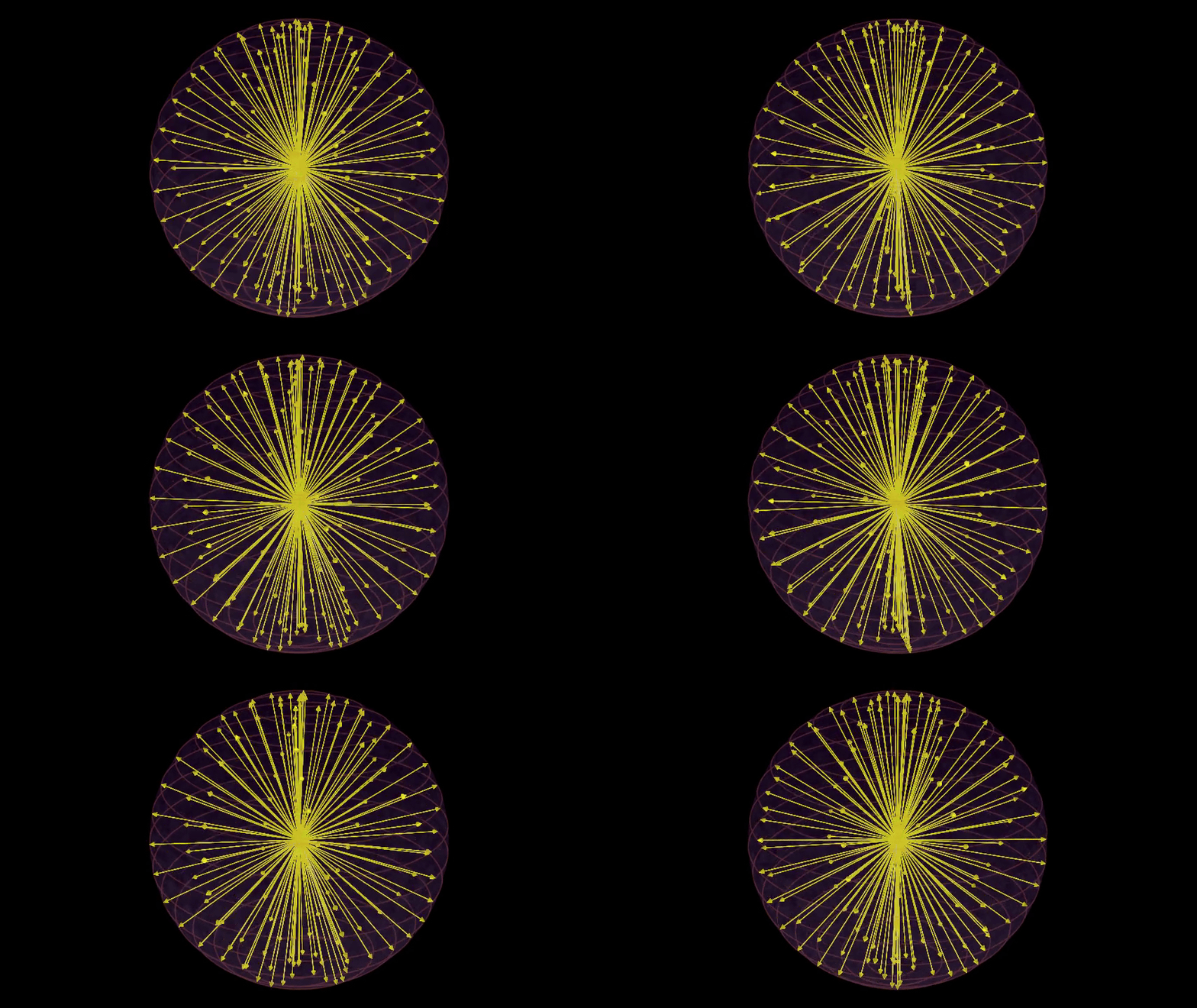
WIP-1: Ultrashort Echo Time (UTE) T2* mapping
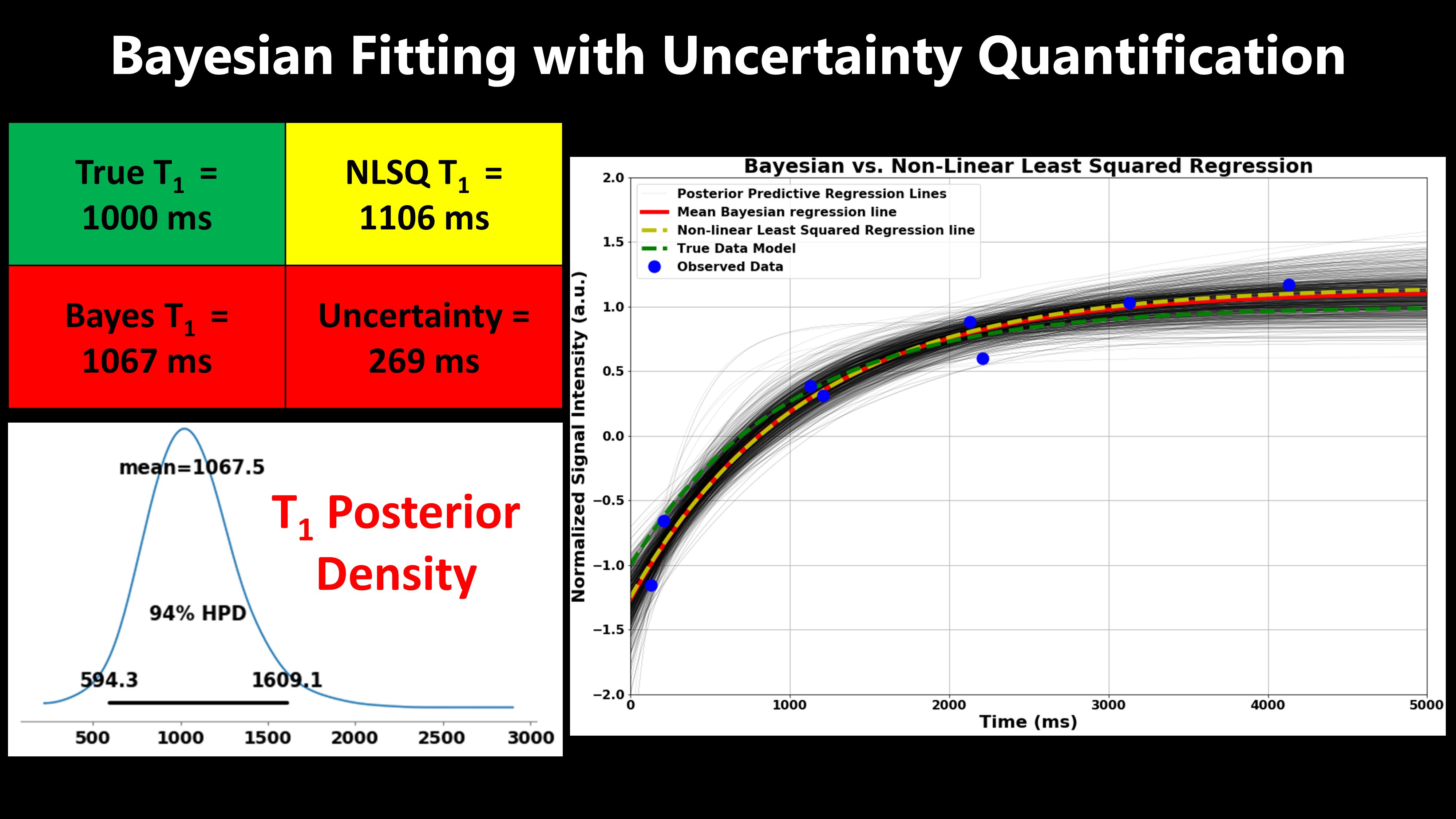
WIP-2: Myocardial T1 mapping
Get future posts delivered to your inbox.